


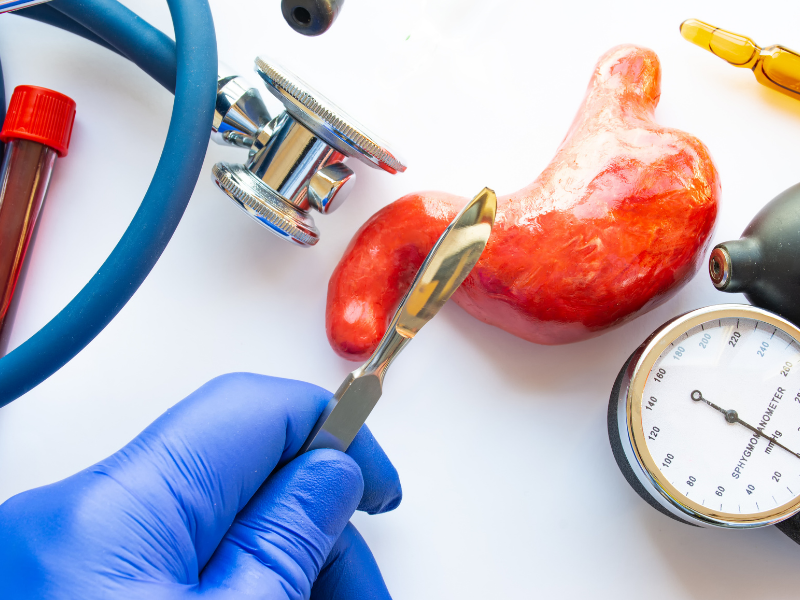
With the change in eating habits and the spread of what we call fast food, obesity has taken its place among the most common health problems today. People resort to many methods to solve the obesity problem. Gastric By-pass is also one of the most frequently used methods to solve the problem of obesity It is known as the obesity surgery method, which has been applied the most in many European countries.
What is Gastric By-Pass?
Gastric bypass surgery, also called Roux-en-Y, is a bariatric surgical method that restricts food intake and reduces nutrient absorption by causing changes in intestinal functions. Bariatric surgery is a general term covering morbid obesity treatments.
In this surgical method, the structures of the stomach and intestine are changed. While the food intake is restricted as a result of the reduction of the stomach volume, the change in the intestinal structure also reduces the nutrient absorption.
Apart from morbid obesity (defined as a body mass index greater than 40), this surgical method is also used to treat type 2 diabetes, hypertension, sleep apnea, and other comorbid conditions. Thanks to the gastric bypass method, it has been observed that the long-term mortality rate of the patients is reduced by up to 40%.
What are the Gastric By-pass Types?
Gastric by-pass operation has 3 different types according to the way it is done. These varieties are:
ROUX-EN-Y (PROXIMAL)
It is known as the most commonly used gastric bypass type because it is the method that causes the least nutritional problems. At the same time, it has been determined that it is the most used bariatric surgery method in the USA. In this method, most of the absorptive functions of the small intestine are preserved. The person treated in this way feels full in a very short time when he eats.
ROUX-EN-Y (DISTA)
It is a change in the structure of the small intestine. As a result of this change, malabsorption of mainly fats and starches, but also various minerals and fat-soluble vitamins takes place. Nutritional side effects are more common.
LOOP GASTRIC BY-PASS (MINI GASTRIC BY-PASS)
Loop reconstruction is used. It is rarely applied due to its simple construction and the development of laparoscopic surgery, as it is an alternative to the Roux-en-Y procedure.
How is Gastric By-pass Surgery Performed?
This surgical method is applied in two stages. In the first stage, the upper part of the stomach is divided into a small part and the lower part is divided into a large part, so that the edibles are collected in a small part. This small part of the stomach can only accommodate 28 grams of weight. In this way, although the patient eats less, it is ensured that the feeling of saturation is reached more quickly.
In the second stage, by-pass operation, also known as bridging, is applied. At this stage, a structural change is made in the small intestine and the small intestinal tract is shortened, allowing less absorption of nutrients. The first part of the small intestine is skipped and the small part formed in the stomach and the lower part of the intestine are connected. Those who are eaten go first to the small pouch in the stomach and then to the second part of the intestine. As a result of this surgical method, most of the stomach and part of the intestines are removed from the gastrointestinal tract. In this way, it is ensured that the patient both eats less and absorbs less calories from the meals.
What are the Surgical Methods Used in Gastric By-pass Surgery?
While performing gastric bypass surgery, a surgical method is chosen according to the patient’s condition and considering their wishes. There are 3 different surgical methods in total in this surgery. These surgical methods are:
SLEEVE GASTRECTOMY
For details about Sleeve Gastrectomy sleeve gastrectomy for obesity treatment – Sleeve Gastrectomy
ROBOTIC SURGERY
This method is performed through a few small incisions made in the patient’s abdomen. Thanks to the small size of these incisions, the patient can return to his daily life more easily after the surgery. The healing process takes a short time.
OPEN SURGERY
In this surgical method, a large incision is made in the patient’s abdomen. The biggest advantage of this method is that the surgeon can see the patient’s tissues more clearly. The size of the incision can delay the return to daily life and the healing process.
LAPAROSCOPIC SURGERY
It is made by making several small incisions in the abdomen of the patient. It is a method performed under the guidance of a camera called a laparoscope that shows the inside of the patient in 2D.
What are the Positive Effects of Gastric By-pass on Health?
Although it is known that gastric bypass surgery is generally used in the treatment of obesity, it is also very effective in healing many diseases associated with overweight. Positive effects of gastric bypass surgery on health:
- In the 1-year period after the surgery, people lose 75% of their excess weight. In the following process, the rate of weight loss slows down and 80-90% of this excess weight is lost in the 2nd year. Some chronic diseases caused by excess weight also show improvement in this way.
- The cure rate in hyperlipidemia patients is 94%.
- The recovery rate in essential hypertension patients is around 60-70%, and a decrease in the need for medication is observed.
- The improvement rate in obstructive sleep apnea, one of the most important causes of which is overweight, is 75% and it is seen that the frequency of snoring in people also decreases.
- The cure rate in gastroesophageal reflux disease (GERD) is 90%,
- The recovery rate in type 2 diabetes patients is around 70-80%, and it was observed that the blood sugar level returned to normal after the surgery.
- It has been determined that this risk is reduced by 30% in patients with diabetes risk.
- The recovery rate was observed as 82% in patients with asthma.
- The patient’s knee and waist area due to excess weight decreases, and as a result, the recovery rate in diseases such as osteoarthritis in the knee and foot regions reaches 85%.
- As a person loses their excess weight, their self-confidence is restored and there is a 72% reduction in the risk of depression.
- There is a decrease in the incidence of venous thromboembolic diseases that cause conditions such as leg swelling.
What are the Possible Complications in the Process of Gastric By-pass Surgery?
These complications are divided into long-term and short-term ones:
- Complications that can be seen in the short term: Leakage risk, bleeding risk, respiratory tract infection, embolism, incisional hernia, wound infection.
- Complications that can be seen in the long term: Gastric ulcer, gallstones, incisional hernia, intestinal obstruction.
